





Technology Profile
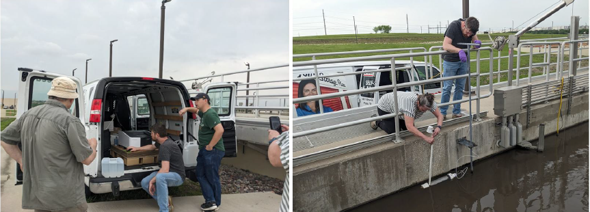
PFAS are a class of persistent contaminants that are nearly ubiquitous in the environment and are linked to several adverse health outcomes, including increased risk of obesity, low birth weight in children, and decreased immune system response. Monitoring PFAS levels can help water treatment centers determine whether remediation is necessary. However, current PFAS detection methods can suffer from fouling and become unstable over time.
The Infrared Sorbent Material-Amplified Rapid Trace (IR-SMART) sensor, developed by Max-IR Labs, is an environmental screening tool that uses infrared light to determine PFAS types and concentrations in water. This technology can provide results in 3 – 6 hours, much quicker than conventional PFAS lab testing methods, and allows scientists to conduct testing onsite.
| Technology | The IR-SMART sensor measures the absorption of infrared light to monitor PFAS in water. It is a portable, automatable, and cost-effective sensor to monitor PFAS in field conditions and for inline water quality monitoring in water treatment trains. This technology uses an optical fiber coated in an ion-selective material to trap PFAS in the water. When infrared light is sent down the fiber, PFAS absorbs some of the light, and these changes in the infrared signal are detected by the sensor. Scientists can measure these signal changes and, using computational approaches, can identify the types and concentrations of PFAS in the water. |
|---|---|
| Innovation | IR-SMART will be the first field-deployable PFAS detection system that combines sorption-based preconcentration with infrared spectroscopy, enabling direct, inline measurements at 10 parts per billion (ppb) in the field and 0.1–1 ppb in the lab. Unlike conventional methods, IR-SMART can provide onsite monitoring without costly consumables or specialized operators. The platform is adaptable across water, wastewater, and industrial effluents, with estimated cost savings of 60–80% compared to existing tools due to lower instrument cost, simplified operation, and reduced sample handling. Due to its modular fiber cartridge design, the sensor has the potential to be adapted to detect other contaminants, such as nitrates, ammonia, and inorganic carbon. |
| Contaminant and Media | PFAS, including a range of carboxylic (PFCA) and sulfonic (PFSA) acids, nitrates, ammonia, sulfates, and inorganic carbon in groundwater, surface water, and industrial wastewater. |
| Technology Readiness Level | TRL 5-6 (pilot scale system). |
| Progress and Impacts |
|
| Principal Investigator | Ecatherina Roodenko |
| Institution | Max-IR Labs, LLC |
| Grant Number | R44ES033581 |
to Top