




Superfund Research Program
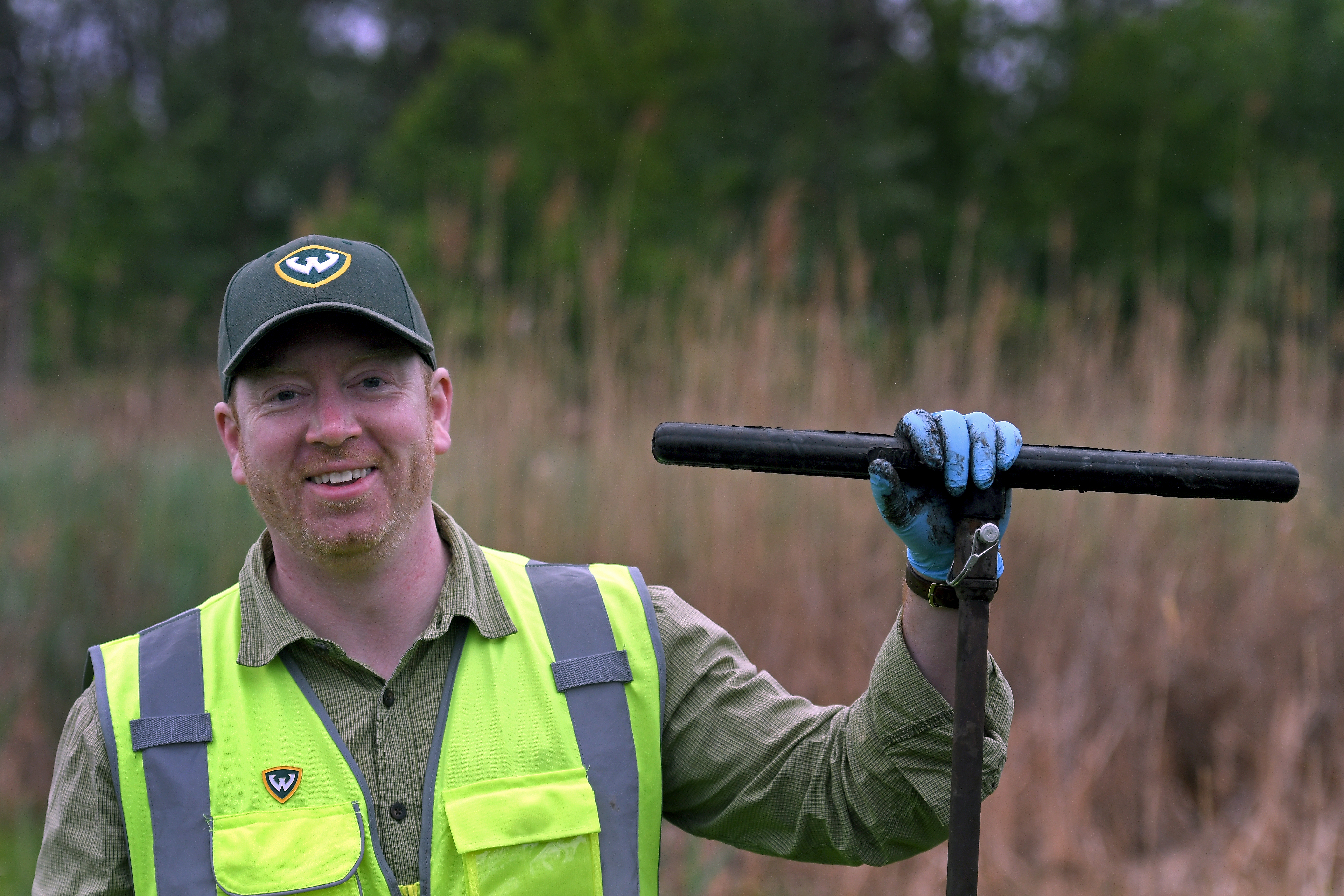
“It is a privilege to turn my childhood interest in rocks, sticks, and dirt into actionable research that empowers communities,” said O’Leary.
Brendan O’Leary, Ph.D., is the 27th recipient of the NIEHS Superfund Research Program (SRP) Karen Wetterhahn Memorial Award. This award recognizes an outstanding graduate student or postdoctoral researcher who exhibits the qualities of scientific excellence and service to the community. O’Leary is a postdoctoral researcher at the Wayne State University SRP Center, also known as the Center for Leadership in Environmental Awareness and Research (CLEAR).
“Through my work with CLEAR, I have experienced firsthand how interdisciplinary collaborations and community engagement can lead to actionable research,” O’Leary said. “My career goal is to continue fostering collaborations to improve public health in urban environments.”
An Interdisciplinary Path to Environmental Health
His journey began with a childhood curiosity for ‘rocks, sticks, and dirt,’ which he pursued through interdisciplinary undergraduate and master’s degrees in environmental science and geology, and ultimately a Ph.D. in environmental engineering. This training equipped him with the skills and knowledge needed to tackle complex urban environmental challenges.
His research at CLEAR focuses on integrating urban hydrogeology, contaminant transport, and geospatial modeling to track and remediate volatile organic compounds (VOCs).
“A lifelong Detroiter, Brendan has dedicated his research career to the health and environmental issues affecting his hometown,” said Glen Hood, Ph.D., O’Leary’s research advisor. “In his own words, Brendan told me that ‘these issues keep me up at night.’ His research aims to deliver tangible benefits to the Detroit region and beyond.”
Innovative Research for Urban Challenges
“Brendan has been a vital member of our Center since its inception,” said Melissa Runge-Morris, M.D., co-director of CLEAR. “His dedication to the pressing public health concerns central to CLEAR’s mission has been pivotal to the integration of the various elements within our Center.”
O’Leary’s geospatial modeling work was instrumental in a 2020 study that linked airborne VOC concentrations to Detroit’s high preterm birth rates. He also led a collaborative study with Michigan’s Department of Environment, Great Lakes, and Energy (EGLE) that demonstrated plants can be used to detect underground VOCs. The study’s findings suggest that sampling vegetation could be a more cost effective and less invasive alternative to measure VOCs compared to traditional methods of drilling into the earth.
In partnership with EGLE and Henry Ford Health, O’Leary also developed Michigan's first Natural Language Processing software that transforms decades of environmental reports into machine-readable datasets. This powerful tool, which he is exploring to commercialize, significantly enhances the ability to analyze connections between environmental exposures and health outcomes.
A Passion for Community Science and Mentorship
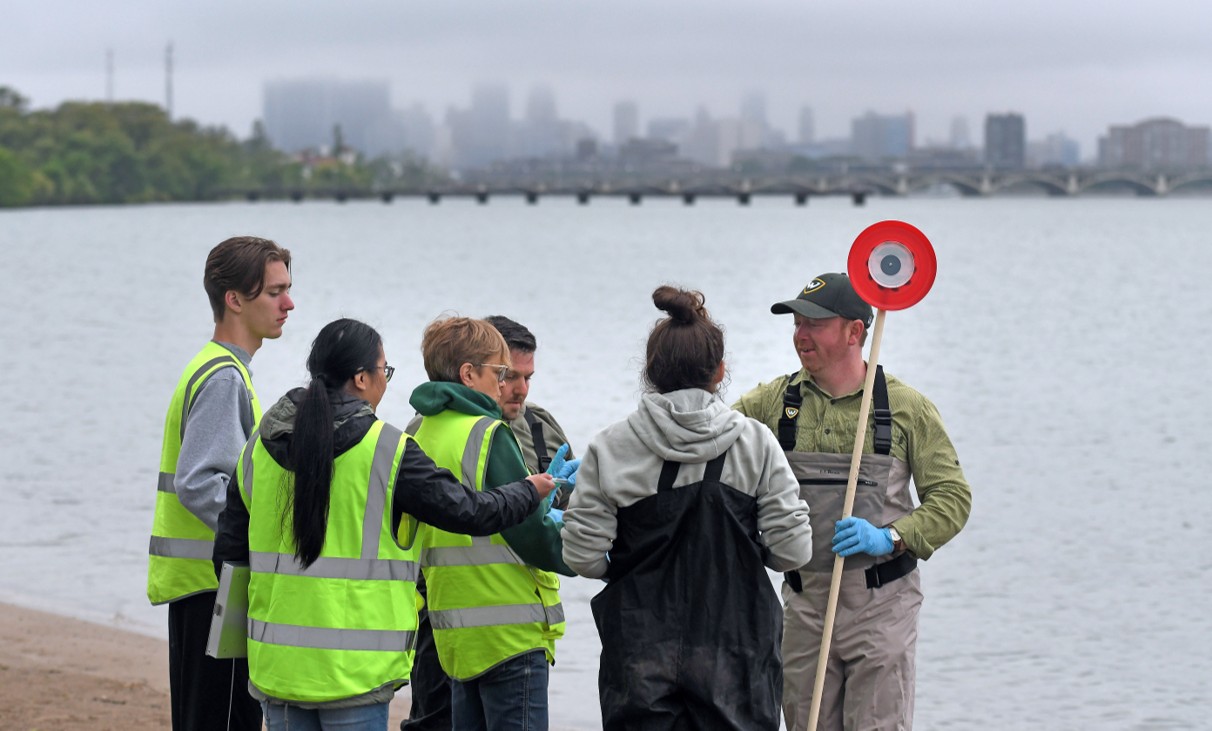
O’Leary and CLEAR trainees and researchers conduct air quality sampling Belle Isle, Michigan. (Photo courtesy of CLEAR)
Beyond his research, O’Leary is a champion for community science. He co-founded Detroit AirNet, a community science platform connecting residents with university students. As an inaugural fellow in the American Geophysical Union’s Thriving Earth Exchange, he guided community-driven science projects from concept to completion. This experience led him to collaborate with residents and researchers in eastern Ohio and form a rapid response team to address community health concerns after the East Palestine train derailment.
“Brendan’s collaborative, community-based approach to research, and the way he lives his life, exemplifies the spirit of Dr. Wetterhahn,” Hood stated. “He is the glue that helps connect our various projects.”
O’Leary’s role as a mentor is equally significant. He has trained and guided over 18 undergraduate and graduate students from a variety of programs, including anthropology, biology, political science, and engineering.
“Many students have shared with us the deep gratitude they have for the patience, integrity, and kindness that embodies the mentoring connections they have developed with Dr. O’Leary,” noted CLEAR Co-Director Carol J. Miller, Ph.D. “His enthusiastic personality makes him a uniquely engaging and memorable mentor.”
A Future Focused on Actionable Change
O’Leary’s current work continues to bridge disciplines. He is organizing a large-scale, Center-wide study of 500 Detroit homes to link indoor and outdoor VOC exposures with health data. His passion for service is also evident in his volunteer work, which includes leading efforts to convert a local brownfield into a neighborhood baseball field and designing an after-school environmental science program.
“It is Brendan’s unique intrinsic features, his engaging character, his quest for research excellence, his devotion to colleagues and the community, and his drive to find real-world solutions, that solidify him as a worthy candidate,” said Runge-Morris and Miller. “We are confident that Brendan is on a trajectory to honor the legacy of Dr. Wetterhahn.”