




Superfund Research Program
By Michelle Zhao
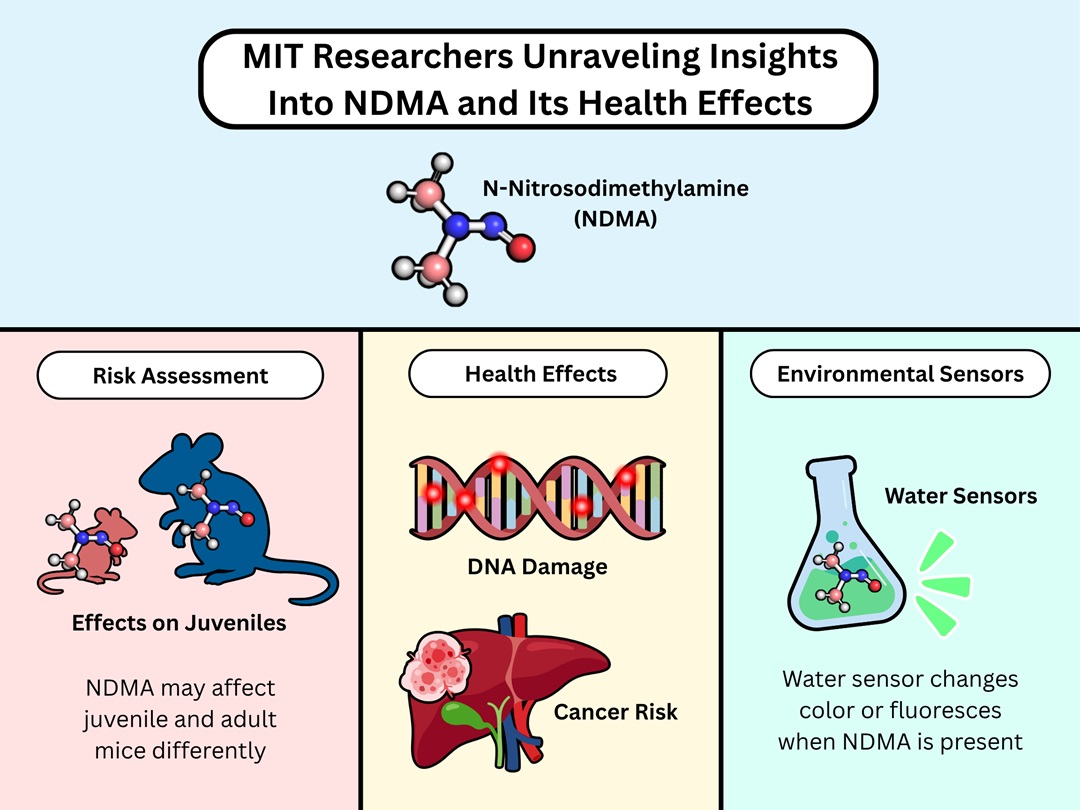
Supported by the NIEHS Superfund Research Program (SRP), researchers at the Massachusetts Institute of Technology (MIT) SRP Center investigate how N-nitrosodimethylamine (NDMA), a carcinogenic chemical, affects human health at a genetic level. The team develops methods of detecting NDMA in the environment and studies how it affects human health. They also work with communities to involve residents with environmental cleanup.
The Problem:
In the 1990s, over 20 million gallons of chemical waste leaked into the environment in Wilmington, Massachusetts. The waste contained NDMA, which spread underground and contaminated the water supply of nearby communities.
Shortly afterwards, a larger-than-average number of childhood cancer cases were reported in the area, a phenomenon known as a cancer cluster. While NDMA was listed as a contaminant of concern at that time, it was unclear if NDMA was linked to this cancer cluster. Worried Wilmington residents reached out to the Massachusetts Department of Public Health, the Environmental Protection Agency, and MIT, leading to the area’s designation as a Superfund site in 2007 and the establishment of the MIT SRP Center in 2017.
SRP Solutions:
Led by Director Bevin Engelward, Ph.D., the MIT SRP Center was founded in response to community concerns about NDMA exposure. The center conducts research on the health effects of NDMA and related chemicals, as well as possible methods to manage these effects.
Developing NDMA Detectors
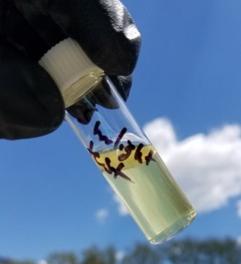
A trainee holds a prototype of a water sensor that turns green in the presence of NDMA.
NDMA is part of a family of compounds that are naturally found in low levels in air, food, and water, but can also be formed during industrial processes like leather tanning and tobacco production. Despite its ubiquity, NDMA is difficult to detect, and traditional methods of detection require specialized lab equipment that can be very slow and expensive to use.
MIT SRP Center researchers, led by Timothy Swager, Ph.D., developed several different sensors to detect and measure NDMA. One of the lab’s tools is a sensor that can measure NDMA in air in real time. The sensor is made of carbon nanotubes that are coated in cobalt, strung between gold electrodes to conduct a current through the tubes.
When NDMA interacts with the cobalt on the tubes, a slight change in electrical resistance occurs, which researchers can measure to determine the concentration of NDMA in the air in parts-per-billion levels. This tool is more portable than the equipment traditionally used for NDMA detection, and measurements can be read remotely on a computer or smartphone.
Swager also developed a method to detect NDMA in water using a chemical mixture containing a type of copper atom, or isotope. NDMA in water interacts with copper isotopes, creating molecules that fluoresce. According to Swager, these fluorescent molecules could function like sensors for NDMA, and might be used to quickly identify if a water sample contains the chemical. Another assay developed by Swager’s research team uses a test solution that reacts when NDMA in water is broken down by sunlight, turning a vibrant green color. This simple assay works in as little as 20 minutes and can identify NDMA concentrations as low as 0.66 parts per million, making it viable for use in the field or at home.
Recently, Swager’s team also created a special polymer that is covered in electrochemical receptors that specifically recognize NDMA molecules, which attach to the receptors when the polymer is placed in water. This polymer can also be refreshed with a small electric current to remove attached NDMA, allowing it to be reused. According to the researchers, the polymer can detect very small amounts of NDMA and can serve as a reliable sensor for NDMA in water.
Identifying NDMA Damage in DNA
In addition to developing environmental sensors to detect the presence of NDMA, MIT scientists also study how NDMA affects DNA and harms health. Led by Amanda Armijo, D.V.M., Ph.D., a former MIT SRP Center trainee and 2022 SRP Wetterhahn Award winner, researchers found a distinct pattern that appeared when sequencing DNA after exposure.
When a person is exposed to NDMA, the chemical is broken down by the body into toxic molecules that can cause DNA mutations. One NDMA-associated mutation causes DNA bases to pair incorrectly. When the DNA is replicated, this incorrect pair is reproduced in the new DNA.
Armijo’s team sequenced DNA from mice that had been exposed to NDMA. After plotting the frequency of certain mutations, the scientists found that NDMA caused a specific mutation that swapped out one type of DNA base for another. The graph of this NDMA-associated mutation showed a distinct pattern that looked like a “sawtooth.” According to the researchers, this distinct pattern could be used to detect NDMA damage early on and help doctors monitor patients for future health concerns associated with NDMA exposure.
Investigating Characteristics of NDMA Susceptibility in Mice
In March 2021, the Massachusetts Department of Public Health released a long-term study that linked prenatal exposure to NDMA to the childhood cancer cluster in Wilmington. Coincidentally, MIT SRP Center researchers published a paper about what factors affect the risk of NDMA cancer in mice only a week prior.
Jennifer Kay, Ph.D., a former MIT SRP trainee and a researcher in Engelward’s lab and the 2020 recipient of the Wetterhahn Award, led an SRP-funded study that revealed insights into how alkyladenine DNA glycosylase (AAG), a DNA repair enzyme, mediates the effect that NDMA exposure has on a cell.
When DNA is damaged, AAG will cut out and replace the damaged part of the DNA. The researchers found that mice with low levels of AAG had more DNA mutations from unrepaired DNA damage after exposure to NDMA, indicating a higher cancer risk. However, while mice with high levels of AAG had fewer DNA mutations, high AAG mice experienced more cell death, tissue damage, and inflammation after NDMA exposure.
According to the authors, natural variance in AAG levels in organisms might explain why people may experience different disease consequences from NDMA exposure. In a commentary written by Engelward, she notes that humans can vary in AAG levels by as much as 10-fold, and adjusting the levels of AAG in a person could be one method of preventing or treating cancer after NDMA exposure.
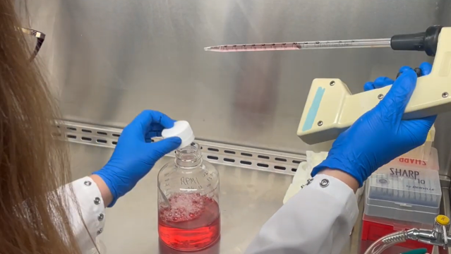
Lindsay Volk, Ph.D., conducts research on DNA repair mechanisms that can prevent NDMA-induced DNA damage and possible cancer. (Photo courtesy of MIT SRP Center)
Younger individuals may also be more susceptible to the harmful effects of NDMA, according to another study from the Engelward Lab. Led by postdoctoral researcher Lindsay Volk, Ph.D., MIT SRP researchers exposed mice to NDMA and found that juvenile mice had more DNA damage and a higher likelihood of developing tumors than adult mice exposed to NDMA. Additionally, researchers found that female mice were less susceptible to the effects of NDMA exposure than male mice.
According to the research team, the differing effects of NDMA may be caused by different cell proliferation rates in the animals. The cells in young mice are growing and dividing more frequently than those in adult mice, which may convert DNA damage into stress responses and mutations in young mice. To test this hypothesis, scientists treated adult mice after NDMA exposure with a cell-proliferating hormone to mimic cell proliferation rates in juvenile mice. They found that the adult mice became more sensitive to NDMA, similar to the juvenile mice, after they were treated with the hormone.
This study indicates that characteristics like age and sex are important factors that should be considered when estimating the effects of NDMA exposure on human populations, and that children may be more susceptible to NDMA exposure than previously believed. Additionally, according to the researchers, the mechanisms that make children more susceptible to NDMA may also make children more sensitive to other chemicals. As such, the team emphasizes that future public health strategies should take juvenile susceptibility into account.
Guiding Community Cleanup Efforts
Over many years, the MIT SRP Center has cultivated strong partnerships with the Wilmington, Massachusetts community. The Community Engagement Core, led by Kathy Vandiver, Ph.D., aims to address local concerns and translate complex scientific findings into hands-on learning resources that help residents protect their health and their environment.
At the community’s specific request to “get their story out to help others,” Vandiver spearheaded a two-year project to create the Lessons Learned Along the Road to Environmental Cleanup online portal. To build this resource, Vandiver worked closely with Wilmington residents, town officials, and other stakeholders, conducting on-camera interviews to preserve the community’s history and firsthand experiences with the Olin Chemical Superfund site. The team collected countless historical documents and held bimonthly meetings, which dedicated community members regularly attended.
This collaboration resulted in an online training portal with three interactive modules designed to provide valuable knowledge for all parties involved in environmental remediation — including community members, federal and state agencies, and corporate representatives. Developed in partnership with the University of Cincinnati and the University of Pennsylvania, the tool uses personal stories and expert advice to guide new groups in navigating the complex environmental cleanup process, from fostering effective community collaborations to building relationships with government agencies.