




Background Information
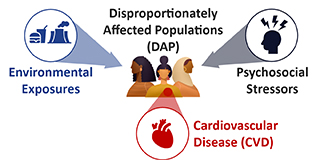
Cardiovascular disease (CVD) is the leading cause of death in the United States and worldwide, and its impact varies substantially across populations. Established CVD risk factors include personal behaviors such as diet and tobacco smoking. Growing evidence highlights the role of physical environmental exposures — such as air pollution and metals — in contributing to CVD. The social environment also plays an important role: psychosocial stressors (PSS) — life events, situations, or demands that challenge an individual’s ability to cope — can adversely affect physical health. PSS and physical environmental exposures may interact or operate through similar biological mechanisms to influence CVD development and may contribute to health disparities across communities.
DTT researchers conducted systematic evidence mapping to characterize the existing literature examining risk factors for CVD and key contributors to CVD-related health disparities. The evidence maps developed examine social and physical environmental exposures in both the general population and groups disproportionately affected by cardiovascular disease.
The resulting interactive tool includes six evidence maps categorizing research on 35 environmental exposures, 13 PSS, and more than 30 CVD outcomes across nine populations (eight disproportionately affected populations and the general population). These maps integrate data from over 8,000 published studies. Using this resource, we identified and evaluated patterns in environmental exposures, PSS, and CVD outcomes across populations. Four exemplar topics are explored in greater detail to illustrate the use and utility of the tool (e.g., to identify data gaps and research recommendations).
The CVD Environmental Health Disparities Tool is unique in providing an extensive characterization of studies examining environmental exposures and psychosocial stressors across all CVD outcomes. This resource can be leveraged to guide effective research, support evidence-based action, and deliver accessible knowledge to affected communities and community-based organizations.