




Superfund Research Program
Nicole Breese, Ph.D.
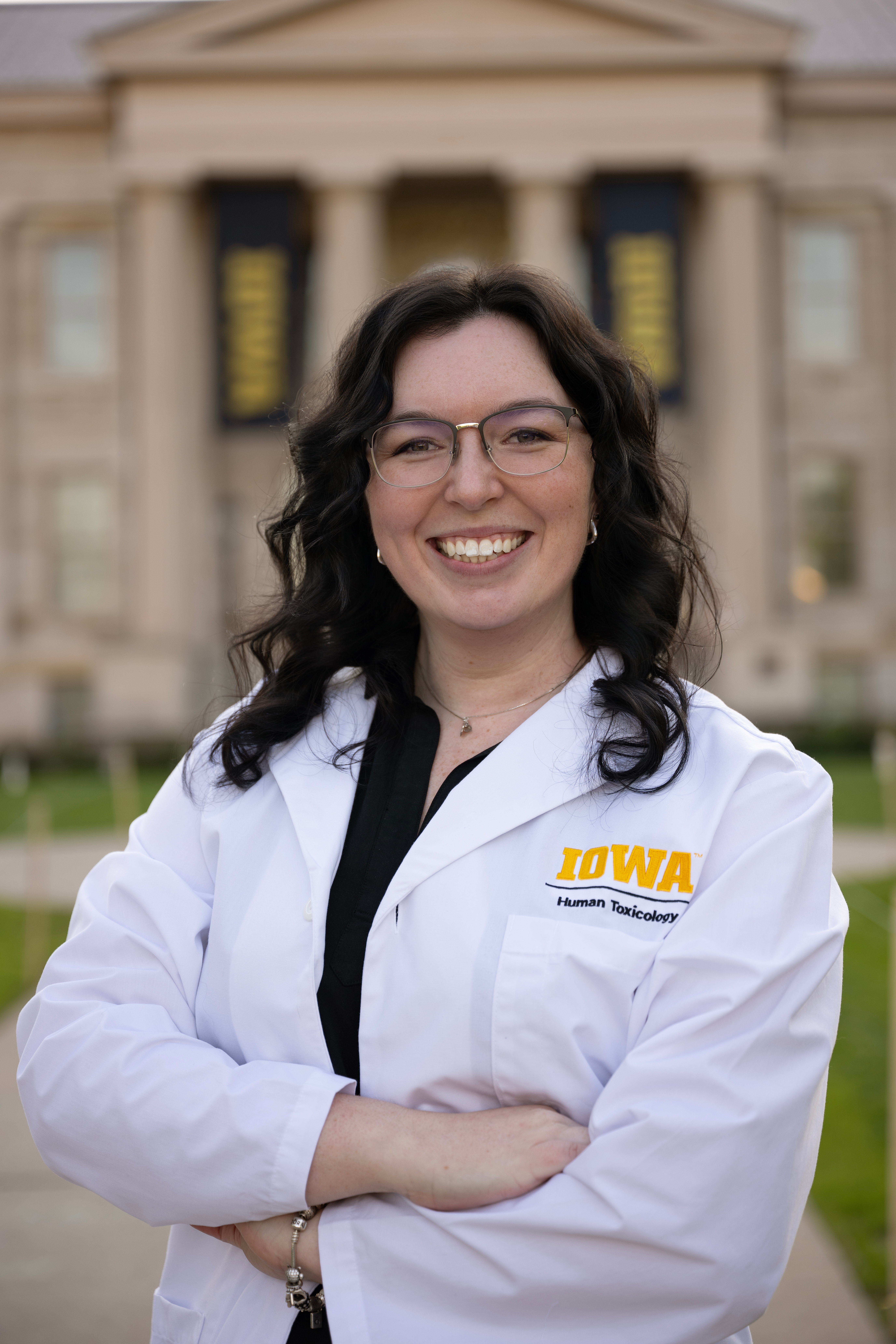
Nicole Breese, Ph.D., is a postdoctoral fellow and a former trainee at the University of Iowa (Iowa) SRP Center under the mentorship of Hans-Joachim Lehmler, Ph.D. For her externship, Breese traveled to the Oregon State University (OSU) SRP Center to work with Robyn Tanguay, Ph.D.
At the Iowa SRP Center, Breese investigates the effects of exposure to polychlorinated biphenyls (PCBs), PCB metabolites, and PCB mixtures on neurodevelopment in U.S. adolescents. PCBs are a class of chemicals that can be found in the air of old school buildings and are probable human carcinogens. During her externship at OSU SRP Center, Breese learned how to use a high-throughput zebrafish screening platform to evaluate the developmental and neurobehavioral toxicity of PCBs and their metabolites during different developmental stages of the zebrafish’s life cycle. Through this screening method, Breese generated a dataset that evaluated PCBs at multiple endpoints, helped her identify which PCB metabolites were more toxic than their parent compounds, and revealed how certain PCB metabolites affect neurobehavioral development.
“This complementary in vivo model can help me rapidly assess many types of compounds, strengthening my ability to connect PCB exposures to health outcomes,” said Breese. “It also helps generate insights into which PCBs might be most harmful to neurodevelopment in organisms, which can have important health implications for humans.”
Audrey Bousquet
Audrey Bousquet is a doctoral student at the University of North Carolina at Chapel Hill (UNC) SRP Center under the mentorship of Rebecca Fry, Ph.D. She completed her externship at the Massachusetts Institute of Technology (MIT) SRP Center under the supervision of Bevin Engelward, Ph.D.
Bousquet’s research focuses on using advanced cell culture approaches to unravel how exposure to inorganic arsenic, a common private well water contaminant in the United States, may impact the early development of the placenta. At the MIT SRP Center, Bousquet learned how to conduct CometChip assays — a versatile and high-throughput assay developed by the Engelward Lab — to examine whether exposure to inorganic arsenic and hexavalent chromium, a co-occurring contaminant, can induce DNA damage in placental cells. Additionally, she explored if the antioxidant potential of selenium could reduce the level of DNA damage after exposure.
“This externship was an invaluable experience. Not only was I able to learn advanced techniques like the CometChip assay, but I also practiced new laboratory skills that I can apply to various experiments,” said Bousquet. “The skills I gained and connections I made will help me continue advancing knowledge of toxic metal(loid) exposures in reproductive and developmental toxicology.”
Tae-Kyoung Kim, Ph.D.
Tae-Kyoung Kim, Ph.D., is a Senior Associate Scientist in the Environmental & Earth Sciences Practice at Exponent. Before entering his industry role, Kim completed his postdoctoral training at the University of California Berkeley (UCB) Superfund Research Program (SRP) Center under the mentorship of David Sedlak, Ph.D. Kim traveled to the Oregon State University (OSU) SRP Center to work with Robyn L. Tanguay, Ph.D., for his externship.
At the UCB SRP Center, Kim focused his research on three major areas: developing improved analytical methods for PFAS measurement, advancing in situ PFAS remediation technologies, and improving Superfund site sampling and monitoring strategies. Kim integrated his analytical chemistry expertise with new skills in developmental toxicology during his externship at the OSU SRP Center. More specifically, Kim developed a remediation method for PCB-contaminated construction waste and used zebrafish toxicity testing to determine that the treatment was both effective and biologically safe.
“During the externship, I learned zebrafish husbandry, exposure design, and toxicology analyses while incorporating biological perspectives into my work in environmental chemistry,” said Kim. “The externship strengthened my ability to collaborate and communicate effectively across disciplines, which supported my long-term professional goal of becoming an independent leader in environmental chemistry and toxicology.”
Airjeet Mitra, Ph.D.
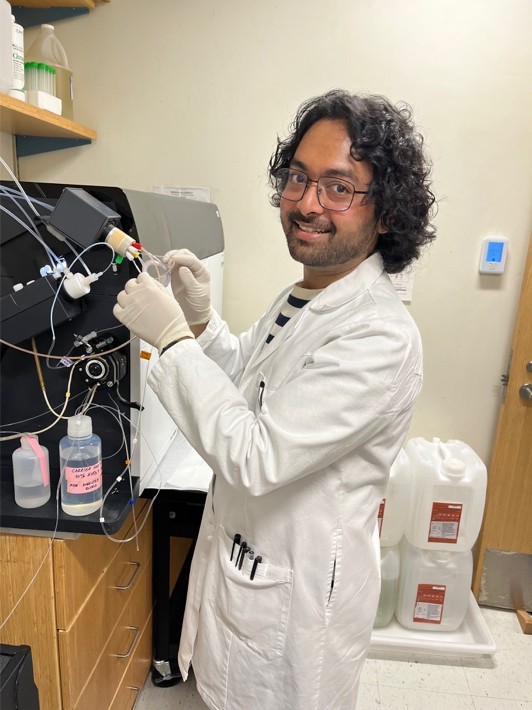
Arijeet Mitra, Ph.D., is a postdoctoral research scientist at the Columbia University Superfund Research Program (SRP) Center, where he works with his mentors Kathrin Schilling, Ph.D., and Anirban Basu, Ph.D. Mitra traveled to the University of New Mexico (UNM) SRP Center to work with Elian El Hayek, Ph.D., Adrian Bearley, Ph.D., and Jose M. Cerrato, Ph.D., for his externship.
Mitra’s research at the Columbia University SRP Center uses uranium isotope geochemistry to investigate the subsurface processes that control uranium cycling and to trace uranium sources in groundwater. During his externship, Mitra applied the same isotopic approach to study the wind-driven transport of uranium-bearing particulate matter from abandoned uranium mines and its potential contribution to human exposure in nearby Tribal communities. His work helped distinguish uranium derived from abandoned mine waste from naturally occurring uranium in soils.
“I was grateful to learn how isotope geochemistry can be integrated with mineralogy, environmental engineering, and community-engaged research,” said Mitra. “Working with scientists from different disciplines broadened my perspective on uranium contamination while reinforcing the importance of translating science into information that is meaningful for affected communities.”
Francesca Germano
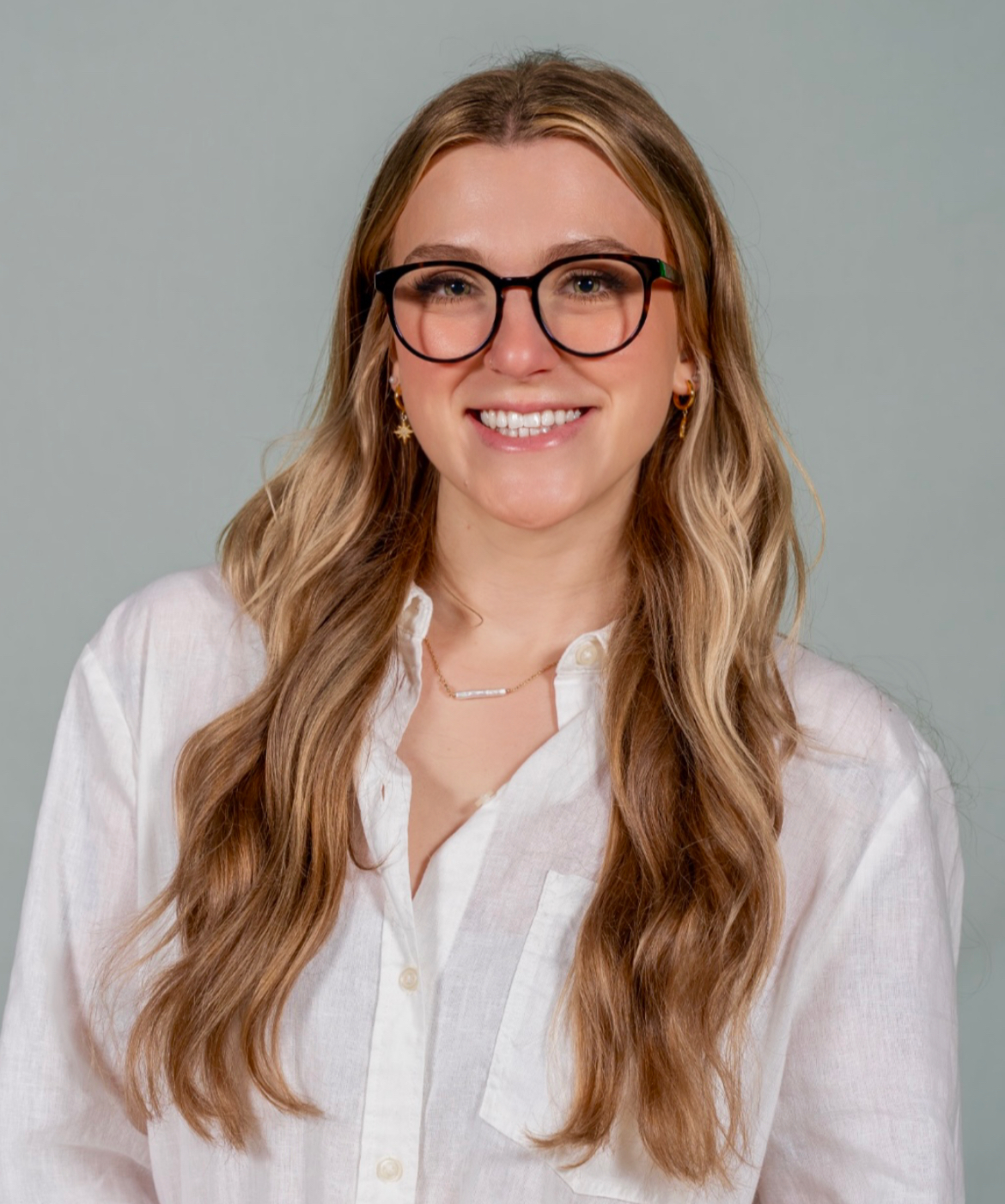
Francesca Germano is a doctoral candidate at the Oregon State University SRP Center, working with Diana Rohlman, Ph.D. She traveled to the Texas A&M University SRP Center for externship, where she was mentored by Galen Newsom, Ph.D., and Weihsueh Chiu, Ph.D.
Germano’s research is primarily focused on environmental health disparities, with a particular interest in understanding disproportionate exposures to environmental contaminants and community-engaged research methods for addressing them. Her externship project leveraged advanced mapping and data processing tools to evaluate how spatial, demographic, socioeconomic, and environmental factors influence cleanup timelines at U.S. Superfund sites. A long-term goal for the project is to develop a publicly available dataset that makes it easier for future environmental health researchers to analyze similar types of data simultaneously.
“I had very limited experience with ArcGIS, Python, and large-scale datasets prior to my externship,” said Germano. “I learned so much about joining datasets across these software platforms and the potential roadblocks that come with large-scale quantitative analyses, which helped me progress toward my professional goal to expand my knowledge in spatial analysis and quantitative research methods.”