





Hot Off the Press
Research Briefs
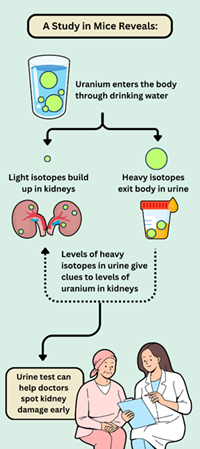
Urine Test May Detect Uranium Build Up Before Irreversible Injury (Columbia University SRP Center): Scientists revealed a new method to detect kidney damage from uranium exposure early using simple urine tests.
Nanoparticles Help Plants Clean Up Forever Chemicals (Yale University): Researchers developed a novel nanomaterial that enhances the ability of plants to remove PFAS from soil and water. Their approach could expand sustainable, cost-effective cleanup options for PFAS.
Dioxin-Like Compounds Shift the Balance of White Blood Cells (Michigan State University SRP Center): Researchers showed that dioxin-like compounds can alter how white blood cells develop and do so in ways that current risk assessment methods fail to predict.
Demonstrating a Pilot System to Electrochemically Remediate Groundwater (Northeastern University SRP Center): Scientists designed a scaled-up electrochemical system that combines electricity with the mineral pyrite, a mineral commonly found in the environment, to continuously remove organic and heavy metal contaminants from groundwater for a year.
Mechanism Linking Preconception Arsenic Exposure and Diabetes in Offspring Revealed (University of North Carolina at Chapel Hill SRP Center): Researchers demonstrated how exposure to inorganic arsenic before conception can trigger changes in gene activity that are passed down to offspring and increase their risk of developing diabetes.
Machine Learning Creates More Complete Picture of Groundwater Contamination (Harvard School of Public Health SRP Center): Researchers revealed how machine learning algorithms can fill gaps in sparse or incomplete groundwater datasets by filling in missing data points.
Using a New Model to Identify Health-Impacting Metal Mixtures (Duke University SRP Center): Scientists developed the linear mixed-effects model, a framework for statistical analysis, to quickly and effectively estimate the effects of individual metals and metal mixtures on zebrafish larvae behaviors.
Machine Learning Predicts Efficiency of Micropollutant Removal (North Carolina State University SRP Center): Scientists created machine learning models that can help predict how well granular activated carbon can clean up contaminated water under different scenarios.
Model Predicts PFAS Buildup in Wild Animals (University of Rhode Island SRP Center): Researchers developed a new model that predicts how PFAS move and build up within food webs, laying the groundwork for screening the thousands of PFAS compounds that could potentially pose a risk for ecological or human health.
News Stories
- Uranium in Drinking Water Linked to Kidney Disease Risk in California Women (Columbia University SRP Center)
- Silicone Bands Offer Simple Solution to Assessing Exposures in Infants (Duke University SRP Center)
- Extramural Paper of the Month: PFAS May Reduce Long-Term Benefits of Weight-Loss Surgery in Teens (University of Rhode Island SRP Center)
- Extramural Paper of the Month: Air Pollution Gases May Trigger Stress Response Tied to Heart Disease (University of Louisville SRP Center)
- Extramural Paper of the Month: Arsenic Exposure Disrupts Human Metabolism (Columbia University SRP Center)
- Extramural Paper of the Month: Optimizing a One-Step Treatment for Water Decontamination (Yale University SRP Center)
- Extramural Paper of the Month: Uranium Buildup in Kidneys is Detected Using Urine Biomarker (Columbia University SRP Center)
- Extramural Paper of the Month: Alligators May Serve as Sentinels for Human Exposure to PFAS (North Carolina State University SRP Center)
- Extramural Paper of the Month: New Model Helps Estimate PAHs in Zebrafish Studies (Oregon State University SRP Center)
-
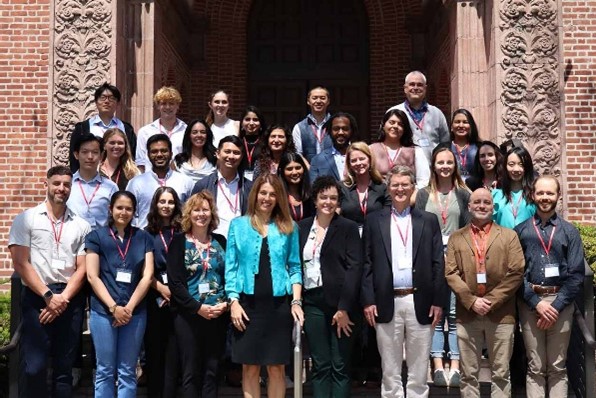
The cross-disciplinary team of scientists from the USC Keck School of Medicine and Viterbi School of Engineering make up the new SRP Center. (Photo courtesy of USC) Introducing the Southern California Superfund Research Program Center (University of Southern California SRP Center)
- Extramural Paper of the Month: Chemical Mixtures Studies May Require Different Statistical Methods (Northeastern University SRP Center)
- Extramural Paper of the Month: Self-Harvesting Shellfish May Lead to PFAS Exposure (Dartmouth College)
-

Puerto Rico has one of the highest rates of preterm birth and infant mortality in the U.S. (Photo courtesy of Northeastern University PROTECT Center) Despite Low Levels, PFAS Remain Linked to Oxidative Stress in Puerto Rican Mothers (Northeastern SRP Center)
- Extramural Paper of the Month: Harnessing Microbes for Remediation (University of Iowa)
- Glowing Worms: A Hands-on Lesson in Heavy Metal Toxicity (Duke University SRP Center)
- Researchers Investigate New PFAS Detection Method (University at Buffalo)
- Reducing Arsenic Exposure for Well Users in Native Communities (Columbia University SRP Center)
- Researchers Identify Combustion Byproducts in Soil After East Palestine Train Derailment (Louisiana State University SRP Center)
- Protecting Disaster-Impacted Communities with Clay (Texas A&M University SRP Center)
-
Rollie Mills, Ph.D., developed a specialized filter to remove PFAS from water (Photo courtesy of the University of Kentucky SRP Center) Thermo-responsive Filters Help Remove PFAS (University of Kentucky SRP Center)
- Kaminski Shares His Story Before Stepping Down (Michigan State University SRP Center)
- Extramural Paper of the Month: New Sensor Detects Cancer-Causing Chemicals at Low Levels (Massachusetts Institute of Technology SRP Center)
- Scientist Answers Big Questions About Tiny Plastics (University of New Mexico SRP Center)
- Keystone Science Lecture Highlights Framework for Evaluating Hazards (University of California, Berkeley SRP Center)v
- Research Consortium Identifies Key Characteristics of Metabolic Disruptors (University of California, Berkeley SRP Center)
-

Six SRP trainees received K.C. Donnelly Externship awards to enhance their research. Six Trainees Win Prestigious K.C. Donnelly Awards (multiple grant recipients)
- Artificial Intelligence Facilitates Pollution Reporting (Texas A&M University SRP Center)
- Superfund Grant Recipients Testify at PFAS Hearing (University of Rhode Island SRP Center, North Carolina State University SRP Center)
- Researchers Highlight How Metal Exposures May Influence Kidney Health (SRP-funded collaboration among the University of Pittsburgh, Duke University, and Icahn School of Medicine at Mount Sinai)
- SRP Well Represented in NIEHS 2024 Papers of the Year (multiple grant recipients)
- Combining Information on Chemical Exposures and Social Stressors Reveals Differences in Health Burden (University of North Carolina at Chapel Hill SRP Center)
- Volatile Organic Compounds May Raise Hypertension Risk in Nonsmokers (Columbia University SRP Center)
to Top