




Introduction
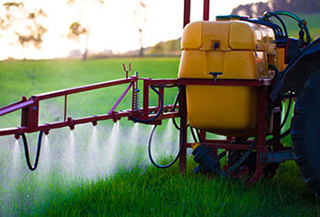
Pesticides
Pesticides kill, repel, or control forms of animal and plant life considered to damage or be a nuisance in agriculture and domestic life. Used broadly, the term includes these types of chemicals:
- Herbicides destroy or control weeds and other unwanted vegetation. They are commonly used on lawns.
- Insecticides kill or control insects. They are used in agriculture, industry, businesses, and households.
- Fungicides control fungi and can be used on plants or other surfaces where mold or mildew grow. They may also have a role in protecting crops.
Over 800 pesticides are registered for use in the United States, some of which are used in large quantities and may pose risks for a variety of health problems.
Because of widespread use, people are exposed to low levels of pesticide residue through a variety of ways in their homes, schools, workplaces, and other facilities. Pesticides can get inside a body from eating, drinking, breathing them in, and through skin contact.
What is NIEHS Doing?
Agricultural Health Study
Since 1993, NIEHS has led the Agricultural Health Study (AHS), which gathers data on more than 89,000 farmers and their spouses on farms in North Carolina and Iowa. It is funded by NIEHS and the National Cancer Institute in collaboration with the U.S. Environmental Protection Agency and the National Institute for Occupational Safety and Health.
AHS research has led to more than more than 200 papers published in the peer reviewed scientific literature. These studies have linked pesticides to risk for Parkinson’s disease, thyroid disease, diabetes, kidney diseases, rheumatoid arthritis, and shingles (herpes zoster), among other health issues. Evidence suggests that children are particularly susceptible to adverse effects from exposure to pesticides, including neurodevelopmental effects.
- Atopy – In one study, early-life farm exposures were strongly associated with reduced risk in adults of atopy, which is a genetic tendency to develop allergic diseases. These results suggest that protective effects on atopy of early-life farming exposures, particularly in people born to mothers who performed farming activities, endure across a life course.
- Autoimmunity – An autoimmune disease occurs when the immune system mistakenly attacks normal healthy cells in the body. Certain types of organochlorine insecticides may increase risk of developing autoimmunity in male farmers. Another AHS study looked at male farmers who are also licensed pesticide applicators and found an link to rheumatoid arthritis, a type of autoimmune inflammatory disease.
- Kidney Disease – A comprehensive study of pesticide use found links to renal cell carcinoma, the most common form of kidney cancer. Four herbicides (2,4,5-T, atrazine, cyanazine, and paraquat) and two insecticides (chlorpyrifos and chlordane) were implicated. A related study suggests that two widely used herbicides, pendimethalin and atrazine, may also be associated with impaired kidney function among male pesticide applicators.
- Shingles – Several specific pesticides were associated with increased risk of shingles in farmers, especially with recurrent use. Shingles is a painful rash caused by the chickenpox virus (varicella-zoster).
- Thyroid Disease – Many pesticides have long been suspected as being disruptive to thyroid functioning. An AHS study linked exposure to several pesticides and increased hypothyroidism risk. Another study observed increased risk of thyroid cancer associated with use of metalaxyl, a fungicide, and lindane, an insecticide. More work is needed to understand the potential role of these chemicals in thyroid carcinogenesis. Lindane is designated as carcinogenic to humans by the International Agency for Research on Cancer.
Pesticides and Sense of Smell (PASS) Study
This study is related to the Agricultural Health Study. Loss of the sense of smell is common with aging, especially in patients with Parkinson’s and Alzheimer’s diseases. Study participants who reported a high pesticide exposure event, such as getting a large amount of pesticides on their skin, were more likely to report a loss of sense of smell 20 years later. Such high pesticide exposure events, especially when clean-up was delayed and skin contact or inhalation was involved, may cause long-lasting damage to our sense of smell.
Researchers funded by NIEHS also reported that inhalation of the widely used pesticide paraquat reduced the sense of smell in male mice for several months.
Pesticides and Parkinson’s Disease
Parkinson's Disease (PD) is the second most common condition involving loss of brain cells, or neurons, such as those that produce the brain signaling chemical dopamine. Dopamine is important for many functions, including movement. More than 10 million people worldwide are living with PD, according to the Parkinson’s Foundation. Yet it is among the least inheritable diseases — meaning that the causes, to a large extent, are likely environmental.
Pesticides may directly or indirectly disrupt the biological pathways that normally protect brain cells selectively attacked by PD.
NIEHS-funded researchers found that the accumulation in the brain of DOPAL, a toxic residue of dopamine, can increase the risk of PD. Pesticides such as dieldrin and benomyl can cause degeneration of dopamine and inhibit the biological mechanism that reduces DOPAL to a less toxic acid — thus increasing the risk of developing PD.
The Parkinson’s Disease, Environment, and Genes study showed that some pesticides, including paraquat, maneb, ziram, benomyl, and several organophosphate pesticides, including diazinon and chlorpyrifos, contribute to PD onset and progression. Other studies have confirmed PD-related motor, cognitive, or depressive symptom progression with such pesticides.
The National Toxicology Program (NTP) has also identified paraquat exposure as a contributor to PD.
Protective glove use and hygiene practices appeared to reduce risk of PD.
NIEHS Success Stories in Research Translation
Protecting Arctic Communities (1MB) - This NIEHS translational research story shows how the community-based organization Alaska Community Action on Toxics (ACAT) works with scientists to address health risks from contaminant chemicals. The ACAT team has used their research findings to inform local, state, federal, and international policies about toxic chemicals and protect populations who are most likely to be affected.
Protecting Farmworkers and Families From Pesticide Exposure (1MB) - This NIEHS translational research story shows how researchers worked with agricultural communities to prevent exposure to organophosphate pesticides. Researchers incorporated community feedback to create pesticide risk messages that are easily understood.
Undestanding Pesticide Toxicity (1MB) - This NIEHS translational research story shows how a research team, funded partly by NIEHS, recommended policy reforms to minimize people's exposure to the pesticide chlorpyrifos. The U.S. Environmental Protection Agency has banned the use of chlorpyrifos on all food sold in the country.
Other Studies
CHAMACOS
unded by NIEHS and other federal agencies, the Center for the Health Assessment of Mothers and Children of Salinas (CHAMACOS) study, at the University of California, Berkeley, is the longest running longitudinal birth cohort study of pesticides and other environmental exposures among children in a farmworker community. CHAMACOS means “little children” in Mexican Spanish.
CHAMACOS research covers:
- Effects of pesticides on children’s brain development and respiratory health.
- Methods to reduce pesticide exposures.
- Interaction of stress and early life adversity on health in people exposed to chemicals like pesticides.
Research shows young children who are exposed to glyphosate, an herbicide that controls weeds and grasses, may suffer from liver inflammation and metabolic disorder later in life. Study participants lived in Salinas Valley, California. The research suggests that a child’s lifetime exposure to the popular weed killer may increase the risks in young adulthood of conditions that could lead to liver cancer, diabetes, and cardiovascular disease.
Infants’ Environmental Health Study (Infantes y Salud Ambiental — ISA)
ISA is a community-based cohort of nearly 300 mothers and their children (5-7 years old) living in rural underserved areas of Costa Rica. It is funded in part by NIEHS and coordinated by the Central American Institute for Studies on Toxic Substances at Universidad Nacional in Costa Rica. It is one of the first comprehensive examinations conducted in Central America on the health effects of pesticide exposure. Researchers have found that pesticide exposure during pregnancy can lead to thyroid hormonal imbalance, which can result in a number of health problems.
A different study, the Puerto Rico Testsite for Exploring Contamination Threats (PROTECT) is an ongoing investigation of environmental factors that contribute to preterm birth. This study found that glyphosate was associated with preterm birth in the first study of a glyphosate byproduct and birth outcomes.
NTP Developmental Neurotoxicity Health Effects Innovation Program
Recognizing the need for a new framework to evaluate chemicals with potential to affect brain development, NTP created the Developmental Neurotoxicity Health Effects Innovation program. It expedites research on industrial and commercial chemicals, such as pesticides, that might play a role in conditions such as attention-deficit hyperactivity disorder (ADHD) and autism spectrum disorder. One pesticide being examined is chlorpyrifos, a common pesticide, early exposure to which may cause long-term damage to the function of a key brain signaling pathway.
Further Reading
Stories from the Environmental Factor (NIEHS Newsletter)
- Prenatal Pesticide Exposure May Affect Pediatric Heart Health (December 2024)
- Glyphosate Increases Anxiety-like Behaviors in Rat Model, Expert Says (November 2023)
- Pesticide Exposures on Thai Farms Mapped by NIEHS-funded Scientists (February 2022)
- Inhaled Paraquat Enters Brain, Impairs Sense of Smell in Male Mice (February 2021)
Fact Sheets

Some Natural Pesticide Alternatives (English)

Alternativas para Pesticidas: Por la seguridad de su familia y de sus mascotas

Healthy Homes = Healthy Kids: Pest Control (English)

Healthy Homes = Healthy Kids: Pest Control (Spanish)

Healthy Homes = Healthy Kids: Pest Control (Arabic)
Additional Resources
- Glyphosate & Glyphosate Formulations: National Toxicology Program - Due to the multiple interpretations of evidence on the potential health risks of glyphosate exposure, major public concern about exposure risks, and reported differences in the toxicity of different glyphosate products, NTP is conducting more research on glyphosate and its formulations. NTP is testing the potential genetic and mechanistic toxicity, and will also examine the published scientific literature for data on the effects of glyphosate on non-cancer outcomes.
- PestiBytes: A Podcast Series on Common Pesticide Questions - PestiBytes are brought to you by the National Pesticide Information Center, a cooperative agreement between Oregon State University and the Environmental Protection Agency and produced by OSU's Environmental Health Sciences Center, funded by the National Institute of Environmental Health Sciences.
- Pesticide Exposure - The National Library of Medicine's (NLM) Enviro-health links website provides an excellent set of resources that address the relationship between pesticides and human health. The webpage provides links to selected websites on pesticide exposure, as well as on the treatment and prevention of pesticide poisoning.