





Introduction
Lead
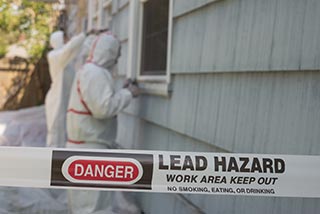
Lead, a naturally occurring metal, is abundantly found throughout the Earth. It has been used in a wide variety of products including gasoline, paint, plumbing pipes, ceramics, solders, batteries, and even cosmetics.
Lead is hazardous to our health. Due to health concerns, in 1973, the federal government began to phase out lead in gasoline and eliminated it by 1996. The United States government banned manufacture of lead-based house paint in 1978. In 1986, the government restricted the lead content of solders, faucets, pipes, and similar materials.
Despite progress in reducing lead exposure in U.S. communities, elevated blood lead levels remain an issue for children, particularly those living in poorer areas. Disparities in who is harmed by lead contamination persist.
Lead exposure remains a significant public health concern because of persistent lead hazards in the environment.
Lead poisoning is a serious problem affecting children globally, according to a study published by the United Nations Children’s Fund (UNICEF) in 2020. The study is the first to describe the magnitude of global lead poisoning. Up to 800 million children have blood lead levels at or above 5 micrograms per µg/dL. Nearly half of these children live in South Asia.
Researchers estimate that half of the U.S. population, more than 170 million people, were exposed to harmful lead levels in early childhood. "The scope of such widespread exposure, particularly from the late 1950s to the early 1980s, suggests the legacy of lead continues to shape the health and wellbeing of the country in ways we do not yet fully understand," according to the researchers. Lead exposure is associated with IQ loss, for which even small deficits can have a meaningful adverse effect on people’s lives and on society.
What are primary sources of lead today?
Old paint dust. Despite the ban, lead-based paint is still found in older homes and buildings. This paint may chip, then turn into dust. Lead dust is the most common way that people are exposed to lead in the United States.
Contaminated soil. Old lead-based paint flaking off the outside of buildings can mix with soil. Before elimination of lead in gasoline, lead from car exhaust mixed with soil near roads, and it is still there. Also, lead in fumes from metal smelting, battery manufacturing, and some factories became airborne and then mixed with soil. Soils in older areas of some cities remain contaminated by lead due to these lead sources. This lead, when part of soil dust, can also contaminate air.
Contaminated drinking water. Water from lakes, rivers, or wells is not a common source of lead. Lead contamination in drinking water usually comes from distribution or plumbing lines that leach lead. The only way to know if lead is in drinking water is to have the water tested.
How much lead is harmful?
No blood lead level is safe.
How does lead get into the body, and how is it measured?
Lead can get into your body by consuming contaminated water or food, or from breathing fumes or dust that contain lead.
Children under the age of 6 years old are at an increased risk for lead exposure, due to their rapid rate of growth and their tendency to place toys and other objects in their mouths that could contain lead or leaded dust.
Lead levels in your body are measured through simple blood samples, and the unit of measurement is micrograms per deciliter (µg/dL).
What is a Blood Lead Reference Value?
The Centers for Disease Control and Prevention (CDC) has been involved in defining criteria for interpreting blood lead levels in children for more than 40 years. In 2012, CDC introduced the blood lead reference value (BLRV) to identify children with higher levels of lead in their blood compared to most other children. Data for developing the BLRV comes from the National Health and Nutrition Examination Survey (NHANES).
The BLRV is simply the value at which a child has more lead in their blood than most U.S. children (97.5% of children, 1-5 years old). Initially, this value in children was 5 micrograms per deciliter (µg/dL). In 2021, CDC updated the BLRV from 5 µg/dL to 3.5 μg/dL.
CDC estimates that, in the U.S., 97.5% of children 1-5 years old now have a blood lead level lower than 3.5 µg/dL.
Updating the reference value allows CDC, other federal agencies, and health departments to focus on children with highest exposures. Children with a blood lead level between 3.5 and 5 µg/dL, and higher, are prioritized for lead exposure reduction actions.
What are the effects of lead in children?
Exposure to lead can have a wide range of effects on a child's development and behavior. Many effects are permanent.
Blood lead levels at or less than 10 µg/dL are associated with increases in behavioral effects, delays in puberty, and decreases in hearing, cognitive performance, and postnatal growth or height.
Health effects are found at blood lead levels of less than 5 µg/dL. Such effects may include diminished IQ scores and academic achievement, and increased behavioral problems and attention-related behaviors.
Pregnant women should avoid lead exposure as maternal blood lead levels even less than 5 µg/dl are associated with reduced fetal growth.
How are adults exposed to lead, and what are the health effects?
Most adults with elevated blood lead levels are exposed to lead at work. A greater chance for lead exposure is found in people who work in occupations related to mining, ironwork or welding, construction including building renovation and remodeling, smelters, shooting ranges, manufacture and disposal of car batteries, automobile radiator repair, and manufacture of pottery or stained glass.
Lead exposure is linked to many health effects in adults.
Blood lead levels greater than 15 µg/dl are associated with cardiovascular effects, nerve disorders, decreased kidney function, and fertility problems, including delayed conception and adverse effects on sperm and semen, such as lower sperm counts and motility.
Blood lead levels below 10 µg/dl are associated with decreased kidney function and increases in blood pressure, hypertension, and incidence of essential tremor, a degenerative disorder of the central nervous system whose most recognizable feature is a tremor of the arms or hands during voluntary movements, such as eating and writing.
There is also evidence showing that adults who have blood lead levels even less than 5 µg/dl may have decreased kidney function.
Because the health effects of lead are different for everyone, more research needs to be done to fully understand them.
The following table, derived from the 2012 NTP monograph on health effects of low-level lead, summarizes these health effects.
| Blood Lead Level | Health Effects |
|---|---|
| Blood lead levels below 5µg/dL |
Children: Decreased academic achievement, decreased IQ, and decreases in specific cognitive measures, increased incidence of attention-related behaviors and problem behaviors Adults: Decreased kidney function, maternal blood lead associated with reduced fetal growth |
| Blood lead levels below 10µg/dL |
Children: Delayed puberty, reduced postnatal growth, decreased IQ and decreased hearing Adults: Increased blood pressure, increased risk of hypertension, and increased incidence of essential tremor |
What can I do to prevent lead exposure?
Lead poisoning is preventable. Eliminating all lead exposure is our best course of action.
- If you live in an older home, check with your local health department about any lead that may be in the paint, dust, or drinking water.
- Monitor recalled consumer products by visiting the Consumer Product Safety Commission.
- The CDC’s National Institute for Occupational Safety and Health has information for workers on jobs that may have lead exposure and how workers may avoid lead exposure.
- Read guidance by the CDC on Lead Poisoning Prevention.
What is NIEHS Doing?
Exposure to lead is a focus of NIEHS’ children’s environmental health research and research-support activities.
- Even low levels of lead in children’s blood is associated with increased behavioral effects, delayed puberty, and decreased hearing, cognitive performance, and postnatal growth or height.1
- Lower IQ scores, decreased academic achievement, and increased behavioral problems and attention-related behaviors were correlated with lead exposure.2
- There is increasing evidence that early life lead exposure is a risk factor for psychiatric disorders and substance abuse. Research also suggests the psychological effects of lead on children's brains may not emerge until adulthood, creating lifelong consequences. Further studies are needed to understand the underlying neurobiology.
- In the U.S., more African-American children have elevated blood lead levels than other groups. NIEHS-funded researchers found lead exposure is transmitted mother-to-child before birth and persists into early childhood. Testing women, particularly African-American women, for blood lead levels during pregnancy, or during pre-conception planning, may identify risk.3
- Higher blood lead levels in women during the third trimester of pregnancy was associated with stunted growth in their children. The study, conducted in Mexico, adds to previous findings linking lead with decreased stature and weight in early childhood.4
- High lead levels during pregnancy are linked to child obesity in a large study, partially funded by NIEHS. Children born to women who have high blood lead levels are more likely be overweight or obese, compared to children whose mothers have low levels of lead in their blood. But, women who take folic acid supplements during pregnancy may reduce the chance that their children are obese.
- Black children who live in racially segregated neighborhoods and were exposed to the metal lead had lower school test scores than their peers, according to research led by a Duke University environmental epidemiologist. The study aids understanding of how the combination of structural racism and environmental contamination affects children’s health and well-being.
NIEHS funds grantees who are discovering new ways to detect or treat lead exposure.
- Reducing lead contamination in urban soils is studied by NIEHS’ Superfund Research Program. Amending soil to immobilize, or bind, the lead is one method. It involves mixing phosphate products, such as compost, fish bone meal, and fertilizers, into soil to change the chemical composition.
- NIEHS supports community-engaged research approaches, which often concern environmental health disparities and environmental justice. Some projects aim to help people learn about environmental pollutants, such as lead, in their local communities.
For example, Science Take-Out, a woman-owned small business, makes science education available to the public through community environmental health education kits. In its Testing Blood for Lead kit, users conduct a simulated blood test to determine a child’s blood lead level.
-
Liu J, Liu X, Wang W, McCauley L, Pinto-Martin J, Wang Y, Li L, Yan C, Rogan WJ. 2014. Blood lead levels and childrenâs behavioral and emotional problems: a cohort study. JAMA Pediatr; doi:10.1001/jamapediatrics.2014.332. [Abstract Liu J, Liu X, Wang W, McCauley L, Pinto-Martin J, Wang Y, Li L, Yan C, Rogan WJ. 2014. Blood lead levels and childrenâs behavioral and emotional problems: a cohort study. JAMA Pediatr; doi:10.1001/jamapediatrics.2014.332.]
-
Renzetti S, Just AC, Burris HH, Oken E, Amarasiriwardena C, Svensson K, Mercado-Garcia A, Cantoral A, Schnaas L, Baccarelli AA, Wright RO, Tellez-Rojo MM. 2017. The association of lead exposure during pregnancy and childhood anthropometry in the Mexican PROGRESS cohort. Environ Res 152:226-232. doi: 10.1016/j.envres.2016.10.014. [Abstract Renzetti S, Just AC, Burris HH, Oken E, Amarasiriwardena C, Svensson K, Mercado-Garcia A, Cantoral A, Schnaas L, Baccarelli AA, Wright RO, Tellez-Rojo MM. 2017. The association of lead exposure during pregnancy and childhood anthropometry in the Mexican PROGRESS cohort. Environ Res 152:226-232. doi: 10.1016/j.envres.2016.10.014.]
-
Huang S, Hu S, Sánchez BN, Peterson KE, Ettinger AS, Lamadrid-Figueroa H, Schnaas L, Mercado-GarcÃa A, Wright RO, Basu N, Cantonwine DE, Hernández-Avila M, Téllez-Rojo MM. 2016. Childhood Blood Lead Levels and Symptoms of Attention Deficit Hyperactivity Disorder (ADHD): A Cross-Sectional Study of Mexican Children. Environ Health Perspect DOI:10.1289/ehp.1510067. [Abstract Huang S, Hu S, Sánchez BN, Peterson KE, Ettinger AS, Lamadrid-Figueroa H, Schnaas L, Mercado-GarcÃa A, Wright RO, Basu N, Cantonwine DE, Hernández-Avila M, Téllez-Rojo MM. 2016. Childhood Blood Lead Levels and Symptoms of Attention Deficit Hyperactivity Disorder (ADHD): A Cross-Sectional Study of Mexican Children. Environ Health Perspect DOI:10.1289/ehp.1510067.]
-
Cassidy-Bushrow AE, Sitarik AR, Havstad S, Park SK, Bielak LF, Austin C, Johnson CC, Arora M. 2017. Burden of higher lead exposure in African-Americans starts in utero and persists into childhood. Environ Int 108:221â227. [Abstract Cassidy-Bushrow AE, Sitarik AR, Havstad S, Park SK, Bielak LF, Austin C, Johnson CC, Arora M. 2017. Burden of higher lead exposure in African-Americans starts in utero and persists into childhood. Environ Int 108:221â227.]
Further Reading
Stories from the Environmental Factor (NIEHS Newsletter)
- Webinar Recognizes Early-career Scientists' Research on Lead, Arsenic (March 2022)
- E-cigarettes Expose Users to Toxic Metals Such As Arsenic, Lead (February 2022)
- Environment and Mental Health — Intimately Connected, Much to Learn (March 2021)
Press Releases
- Reduced Blood Lead Levels Linked to Lower Blood Pressure in American Indians (January 11, 2024)
- Injectable Birth Control May Increase Blood Lead Levels in African American Women (November 19, 2020)
- Childhood Lead Exposure Leads to Structural Changes in Middle-aged Brains (November 17, 2020)
Additional Resources
- American Academy of Pediatrics – Pediatricians play a key role in preventing lead exposure, identifying and treating lead poisoning, and advocating for public health measures to address the problem.
- Lead in Food, Foodwares, and Dietary Supplements – Information from the Food and Drug Administration.
- Lead in Homes – Information from the U.S. Department of Housing and Urban Development.
- Lead Poisoning and Health – A fact sheet from the World Health Organization that describes how people can be exposed to lead, a toxic metal that can affect multiple body systems. It is particularly harmful to young children.
- NIH Research Matters – Racial segregation makes consequences of lead exposure worse.
- Public Statement for Lead – This summary by the Agency for Toxic Substances and Disease Registry describes lead and its exposure-related effects.
Related Health Topics
This content is available to use on your website.
Please visit NIEHS Syndication to get started.