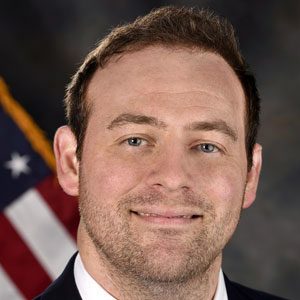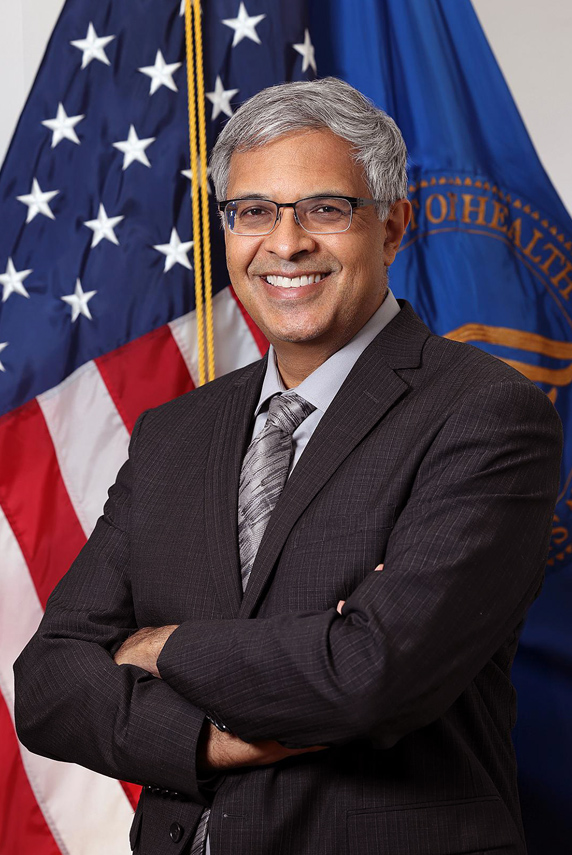
National Institutes of Health (NIH) Director Jay Bhattacharya. M.D., Ph.D., championed the importance of, and opportunities for, NIEHS-supported research during the Sept. 10 virtual meeting of the National Advisory Environmental Health Sciences Council.
The Council is a congressionally mandated body that meets three times a year. It advises the secretary of Health and Human Services, the NIH director, and the NIEHS director on matters relating to research, training, and career development supported by NIEHS.
“I want to start by telling you how important the NIEHS is to the mission of the NIH and to the Make America Healthy Again [MAHA] movement,” said Bhattacharya. “There's a lot of concern about environmental exposures and their relationship to health in the MAHA movement, and the only real solution to that is excellent science.”
Bhattacharya highlighted the following NIEHS research at the heart of disease prevention strategies.
- Exposomics to measure, analyze, and identify exposures over the lifespan.
- Precision environmental health to support tailored prevention and intervention strategies.
- Mechanistic biology and toxicology to improve hazard testing and predictive models that inform public health policy.
“It’s great to have an NIH director who is supportive of the work that we do here at NIEHS,” said then NIEHS Director Rick Woychik, Ph.D. “I’m encouraged by Dr. Bhattacharya’s genuine interest in studying the impact of environmental exposures to ultimately better understand the root causes of chronic disease.”
Woychik also commended Bhattacharya’s efforts to lead the NIH toward a unified strategy that aligns priorities and funding to support the most meritorious science, tackle urgent health needs, and sustain a strong research workforce.
“A lot of times in science, we invest in incremental science,” said Bhattacharya. “I think we become too comfortable in science asking for bunt singles when we really should be swinging for the fences. We don’t want people to be so risk-averse that they aren’t willing to think big.”
Continuing concepts
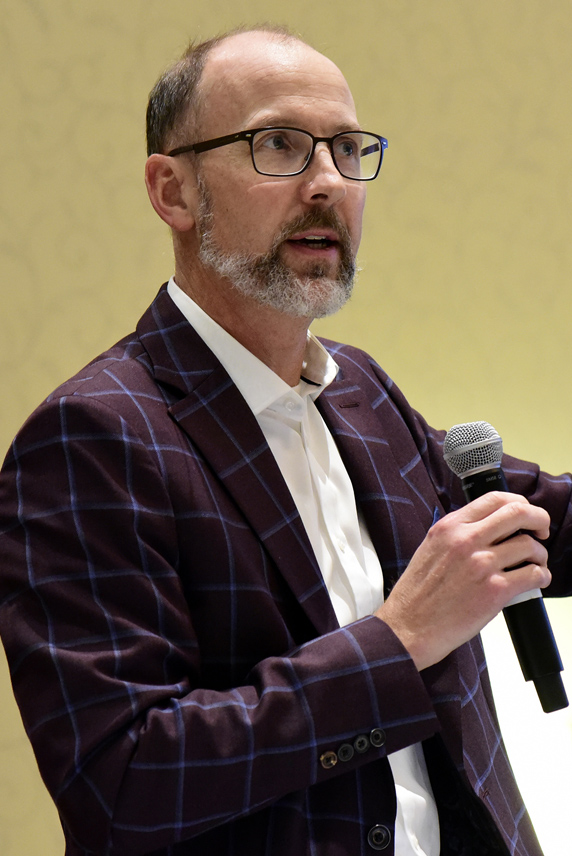
The Council voted unanimously to renew funding for two scientific concepts presented by Liam O’Fallon, a health specialist at NIEHS. The concepts reflect the institute’s long-standing commitment to address environmental health questions through community-engaged research and research translation — ensuring research findings can be accessible and useful to different audiences.
- The Pediatric and Reproductive Environmental Health Scholars program provides research experiences that weave together clinical practice in environmental health, community-level engagement, and teaching. O’Fallon said the program will contribute to a bigger, stronger network of pediatric and reproductive environmental health leaders.
- The Community-Engaged Research for Environmental Health program builds off the long-standing Research to Action (R2A) initiative. R2A, established in 2009, promotes community engagement and environmental health research to support multidisciplinary science, translation, and dissemination to community members and public health professionals.
The next Council meeting is scheduled for June 2-3, 2026.
(Ernie Hood is a contract writer for the NIEHS Office of Communications and Public Liaison.)