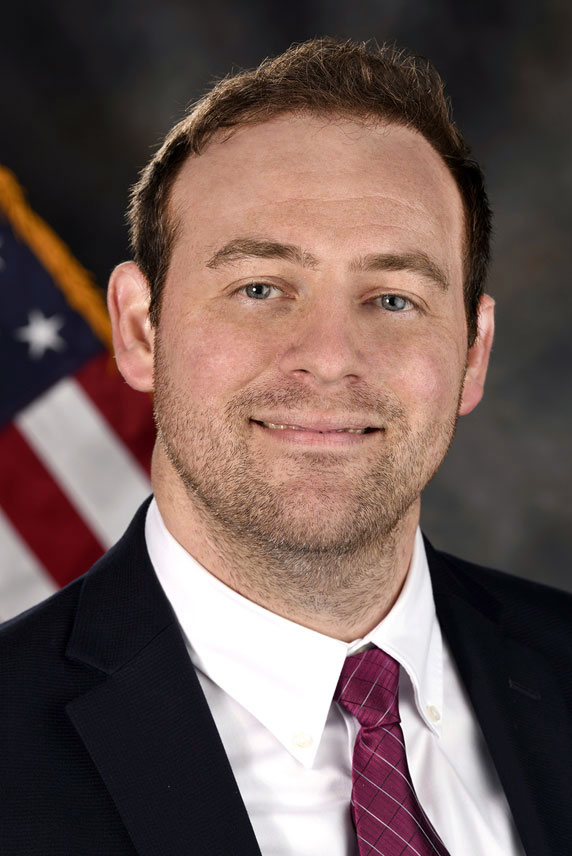
Kyle Walsh, Ph.D., was selected as the new director of NIEHS, which is part of the National Institutes of Health (NIH), by Health and Human Services Secretary Robert F. Kennedy Jr. As part of his responsibilities, Walsh will also direct the National Toxicology Program, which is headquartered administratively at NIEHS.
Walsh is a leading neuroepidemiologist whose work on glial senescence and gliomagenesis has shed light on how genetic, epigenetic, and environmental factors can interact to influence the development of human disease. Before joining NIEHS Oct.10, he led a pioneering, interdisciplinary research program at Duke University, where he studied how the interplay of both heritable and modifiable risk factors can affect brain health, cancer outcomes, and aging.
“Today marks an exciting new era for NIEHS,” said Kennedy. “Dr. Walsh’s scientific expertise and leadership will drive the institute toward even greater breakthroughs in our understanding of how the environment can affect biological systems and human disease.”
“Dr. Walsh is laser-focused on advancing rigorous research that leads to real-world insight and improves the health of all Americans,” said NIH Director Jay Bhattacharya, M.D., Ph.D. “I look forward to seeing NIEHS innovate under his leadership.”
Research promotes health across the lifespan
“I am deeply honored to serve as the director of NIEHS, which is the world’s leading research organization focused on how the environment affects human health,” said Walsh.
“Our institute is well positioned to merge population-level scientific approaches with laboratory research on how environmental factors can affect key biological mechanisms, all while integrating insights from genomics, metabolomics, and other ‘omics’ frameworks,” added Walsh. “We will foster an interdisciplinary, collaborative research approach that builds on the expertise of NIEHS scientists and grant recipients as well as other NIH institutes and centers. In doing so, we will continue to advance critical scientific knowledge that helps to promote health across the lifespan and prevent chronic illnesses such as cancer, cardiovascular diseases, and dementia, among other conditions.”
An interdisciplinary, collaborative approach
At Duke, Walsh served as associate professor of neurosurgery, pathology, population health sciences, and pediatrics. He also directed the Division of Neuro-Epidemiology. He was a Senior Fellow in the Duke Center for the Study of Aging and Human Development and a member of the Duke Cancer Institute, where he co-led the Neuro-Oncology Research Program. In addition, Walsh helped to guide research efforts following the 2023 train derailment in East Palestine, Ohio, providing scientific leadership to U.S. senators in the state and opening the door for important collaborations across multiple federal agencies.
Walsh holds bachelor’s degrees in molecular genetics and anthropology from The Ohio State University. He earned his Ph.D. in chronic disease epidemiology from the Yale School of Public Health, and completed postdoctoral training at the University of California, San Francisco. At NIEHS, Walsh succeeds the institute’s previous director, Rick Woychik, Ph.D., who took a new position in the NIH Office of the Director to help advance Make America Healthy Again initiatives.
(This article is adapted from a Nov. 13 NIH press release.)